Category Archives: Off the (Gardening) Wall

Monday Muse: Black Rook in Rainy Weather

This is not a poem about gardens or even, really, about Nature with a capital "N," but it seems fitting in this season of dying gardens and increasingly grey skies, when everything–lungs, arteries, possibilities–can feel constricted.

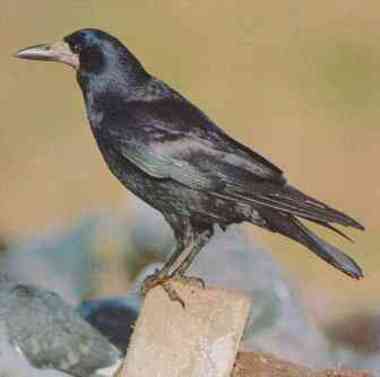
Since we don’t have rooks in the U.S., this poem deserves a photograph of a crow, which we do have, or at least of rain, but Montana seems to have skipped autumn this year, leaping straight from the almost summer-like temperatures that greeted us when we returned from Newfoundland in late September to the snow that now blankets the ground. I therefore have no rain to show you, and even the crows, which at times in summer drive me mad, appear to have fled. So I can offer only this photo of a rook, cadged off the Web.

Both here and in all the other photographs I found, the rook appears much blacker than crows do, glossier, more irridescent. Which makes sense, given what Plath does with it in the poem.
Rook

Image from Rooks and Crowsby Natalie Jacobs.

Continue reading

A Sister’s Death

A couple of days ago my sister died. Suddenly.

I have been wondering what to say about this here, if anything. Then this morning, just catching up on some other blogs, I saw James’ letter to his dead brother on Double Danger, and Victoria’s post about the return of her husband’s cancer on her blog Victoria’s Backyard. Not to mention Zoë’s struggles with her own cancer, mentioned on Garden Hopping, and recorded in detail on her amazing journal, The Journey. And I thought, all right then. I’ll just do this.

So there it is: my younger sister died Tuesday afternoon, and we don’t know why.

I did not even know she was sick.

Well—she was an alcoholic who drank nonstop for weeks at a time, so she was not healthy. She was so stubborn she managed to carry her habit through three or four rounds of rehab, knocking the best programs in the country flat.

I didn’t get a chance to ask what she thought of Amy Winehouse’s “Rehab.” I didn’t get a chance to hear her play the guitar since she took it up again several years ago. I didn’t have a chance to see her garden, or to show her mine. I didn’t get the chance to see the batiks she started making again this spring, though I have one she made years ago on my wall.

Susans_elephant_2

Continue reading

August Singularity

Note: I've changed names here because I don't want to invade anyone's privacy.

Around eleven-thirty this morning, driving north towards the shopping mall where I had a meeting at Borders, I saw several signs of change: a new street-light at Dead Man’s Gulch, an aspen sporting yellow leaves, and a dusting of snow even on Baldy, the lowest of the Bridger Mountains. The snow was gone by the time I drove south again after completing my errands at PetSmart and Target, for by then the sun had reached the western side of the mountains, the side visible from town, but I knew it still lingered in north-facing crevices.

About two weeks ago Mary Jo Snelling summitted Mt. Cowen, in the Absarokas. Today she flew to a rehabilitation center in Denver specializing in spine and brain injuries, to learn how to live as a paraplegic. Her business partner, my friend Pat, dove at once into the task of trying to preserve Mary Jo's business so that when she returns she’ll find it intact and thriving.

Continue reading

Monday Muse: “Beauty is its own excuse for being.”

Here’s Emerson waxing poetic about a flower in the woods. His rather old-fashioned and self-consciously poetic vein   can be trying: You can tell I’m a poet because I say "thee!" And because I invert normal sentence structures! (Yes, I know that both language and poetic conventions were different in 1834, but greater poets worked with them without sounding so stilted in some lines. The problem is that those lines jar, and they do that because Emerson establishes a pretty straightforward syntax and style at the beginning. Okay, I’ll shut up now.)

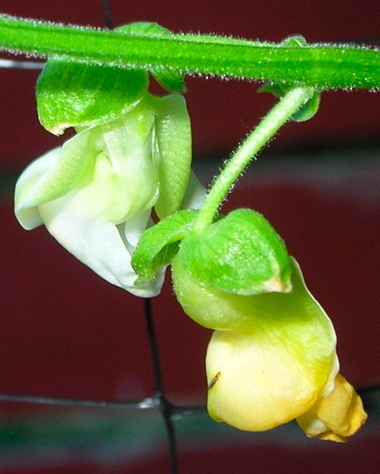
Despite some stylistic lapses, the concepts here are endlessly intruiging. It’s a version of that old conundrum: if a tree falls in the forest and no one hears it, does it make any sound? I don’t think this is a great poem, but it came to mind during my latest philosophical meanderings about bean blossoms and the nature of beauty, so I thought I’d go ahead and post it. Also, the line I quote as my title for this post is pretty damn good: simple, unforced, yet profound — and it scans perfectly, every other syllable receiving emphasis, like the downbeat in a measure of music.

The Rhodora

by Ralph Waldo Emerson

On being asked, Whence is the flower?

In May, when sea-winds pierced our solitudes,
I found the fresh Rhodora in the woods,
Spreading its leafless blooms in a damp nook,
To please the desert and the sluggish brook.
The purple petals, fallen in the pool,
Made the black water with their beauty gay;
Here might the red-bird come his plumes to cool,
And court the flower that cheapens his array.
Rhodora! if the sages ask thee why
This charm is wasted on the earth and sky,
Tell them, dear, that if eyes were made for seeing,
Then Beauty is its own excuse for being:
Why thou wert there, O rival of the rose!
I never thought to ask, I never knew:
But, in my simple ignorance, suppose
The self-same Power that brought me there brought you.

GTS: On the Nature of the Beautiful

Bean Blossoms

Bean_blossoms_closeup

This can’t be the sort of bloom Carol of May Dream Gardens had in mind when she started the Green Thumb Sunday flower posts, but surely she’ll let this one go, given my most excellent excuse: after my garden, flowers and vegetables all, was taken down and out by hail a couple of weeks ago, a bean blossom—precursor of a bean—is a welcome sight indeed. It helps, of course, that they have practically no competition, as the hail stripped my delphinium, decimated my echinacea, and –but enough is enough.

Continue reading